
If you don’t know what Christian Permaculture Regeneration (CPR) is, why our world is in such desperate need of it, and why every Christian should know and live this, click here.
We have taken the original Permaculture Principles, found here and here, distilled them down, and put God back at the center where He belongs. All of our designs (gardens, water systems, waste processing, structures, etc.) for the flourishing of human life and culture should follow these principles. CPR is not merely about gardening, it is about creating “systems of systems” to enable God’s people to thrive in harmony with God’s world (as much as we can post-Fall).
#1 – Keep God at the center

He is the image of the invisible God, the first-born of all creation; for in him all things were created, in heaven and on earth, visible and invisible, whether thrones or dominions or principalities or authorities—all things were created through him and for him. He is before all things, and in him all things hold together.”
– Colossians 1:15-17
God must be at the heart of who we are, all that we do, and every system we design. True stewardship brings us into right relationship with the Creator whom we love, serve & worship. If we gain everything (healthy food and bodies, clean water and air, long life, etc.) and treat the Earth as our mother, but do not have God as our Father, we have gained nothing.1 God is the way, the truth, and the life2 – He makes all things and sustains them in being, giving each of us and all created things purpose and meaning. Jesus Christ, the Son of God made man, through His death and resurrection, has redeemed us and all creation. He, through the power of the Holy Spirit, invites us into His own divine life – that we too may become sons and daughters of God. Our life is called to be a response to this invitation.3
#2 – Work with nature not against it
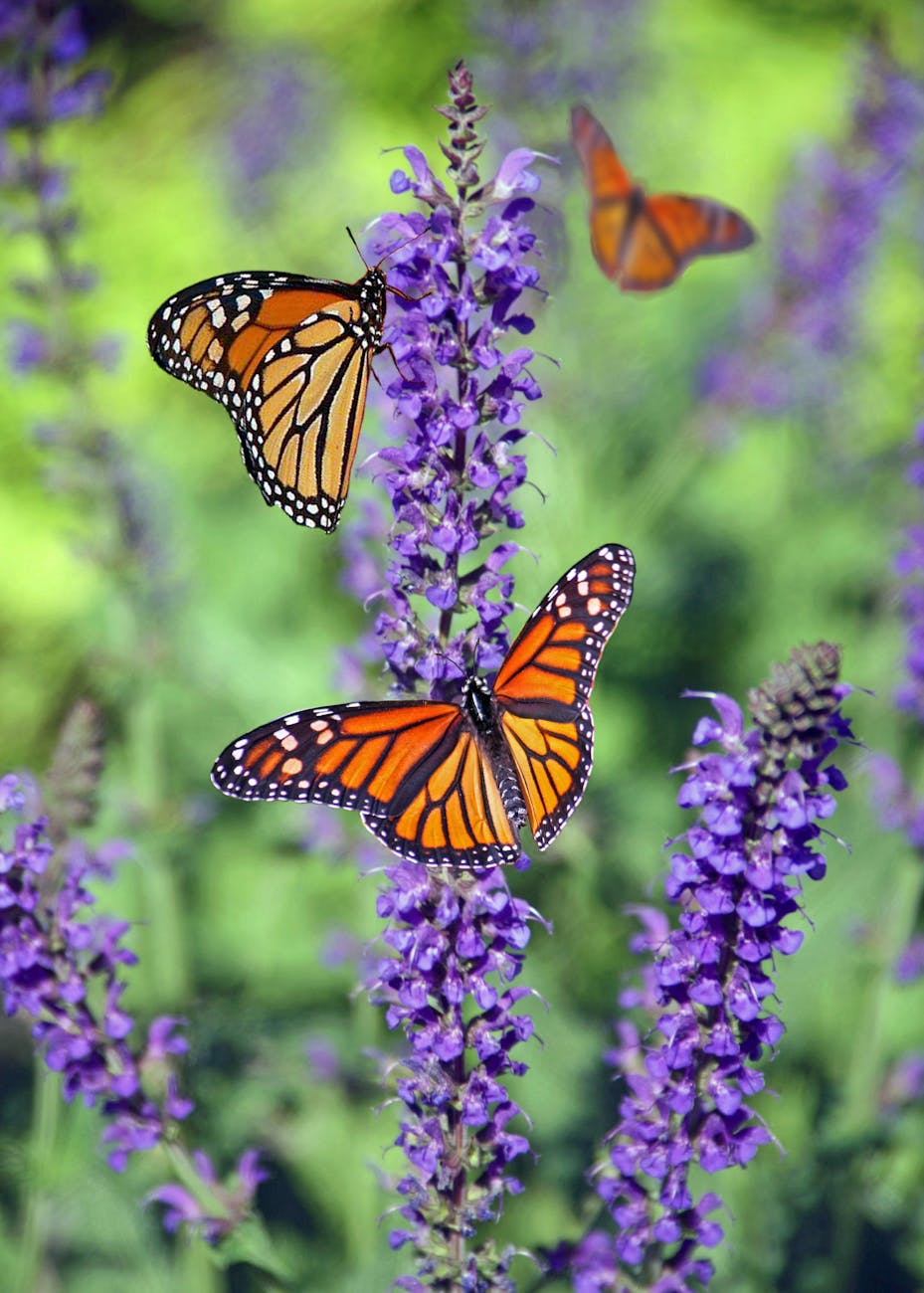
God designed nature, of which we are a part, with its own laws and order. It is worth quoting here from the Compendium of Social Doctrine of the Church (#451):
Nature, the work of God’s creative action, is not a dangerous adversary. It is God who made all things, and with regard to each created reality “God saw that it was good” (cf. Gen 1:4, 10, 12, 18, 21, 25). At the summit of this creation, which “was very good” (Gen 1:31), God placed man. Only man and woman, among all creatures, were made by God “in his own image” (Gen 1:27). The Lord entrusted all of creation to their responsibility, charging them to care for its harmony and development (cf. Gen 1:26-30).
All of our inspiration should come from God and His works and we should uphold them with utmost respect for they are His.4 If we disrespect God’s creation and try to oppose it by enslaving, abusing, and destroying it, we put our own lives, and the lives of our children, in danger. God will not be mocked and nature will have the final word, to our own peril.
While it is true that we typically have to kill to live5 (whether that is plant or animal life), this harvest must be done sustainably. This entails observing God’s design for creation and planning our own designs according to these observations. We must get intimately familiar with the details of natural law and then design systems that foster harmony with existing ecosystems while allowing new ones to be brought forth. This is about integrating with God’s creation rather than segregating ourselves against it.
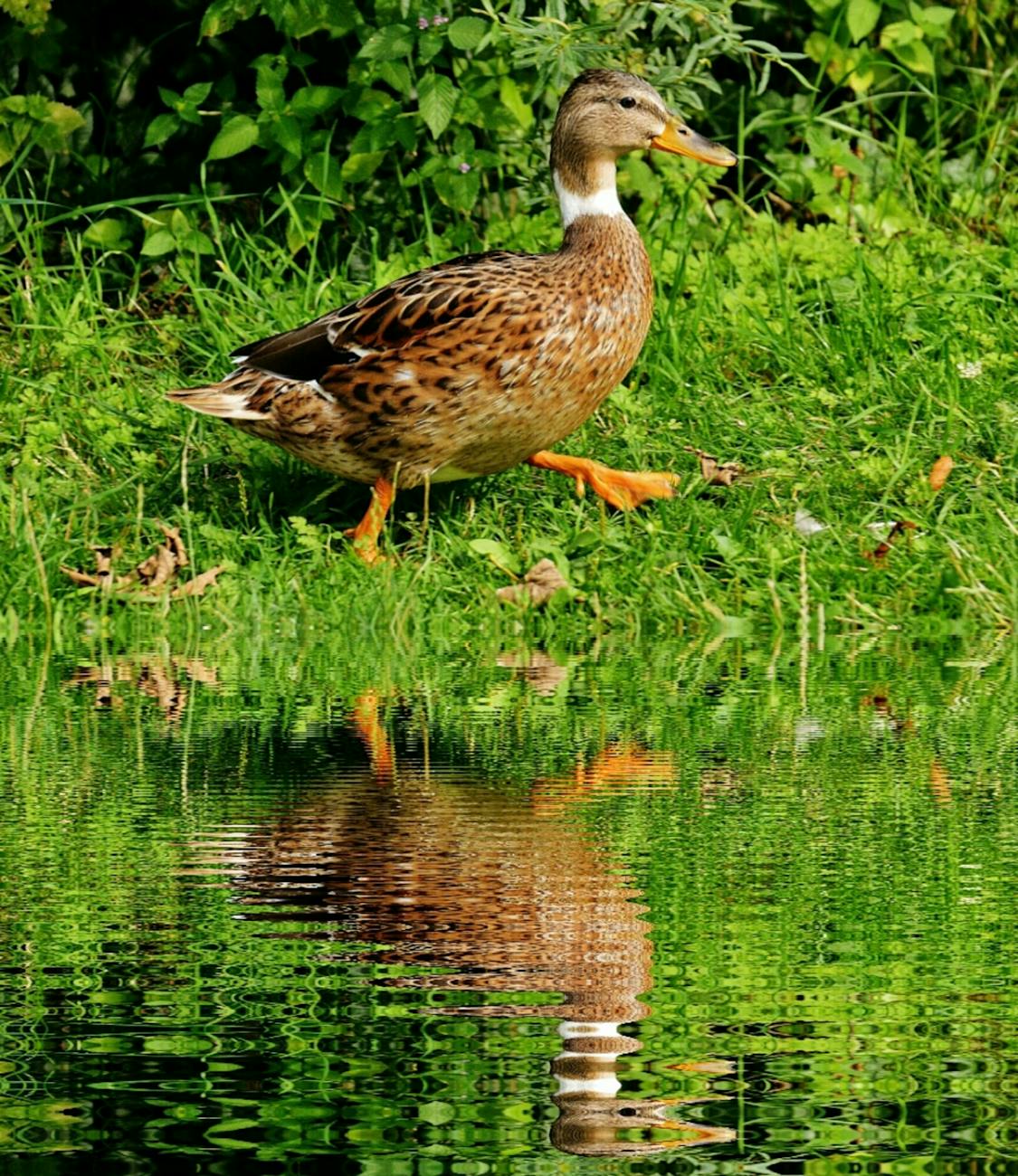
When we find ourselves facing a particular problem, if we look closely we can see that oftentimes the very problem is part of the solution. For example, when we plant a garden one consequence may be we get slugs. However this “problem” could simply mean the garden needs a few ducks around to keep the slug population down. This solution provides the garden with fertility and us with eggs, meat and entertainment. When God allows problems, trials or suffering, they are not punishments or things to be avoided, but rather a way to teach, correct and guide us. When we embrace the cross rather than fight it, we keep our eyes on God and Heaven. Thus, redemption is made manifest in that a perceived weakness becomes a strength. The same is true of our design systems. Ultimately this about re-framing failure and hardship to instead be about feedback, learning and growth. How necessary is this in the spiritual life as well!
When we respect God’s creation, our harvest of it becomes an intimate participation with it and a sacrifice pleasing to God. By working with nature instead of against it, our methods will allow us to go beyond simply “organic” in order to:
- create food that is nutrient-dense and tastes incredible while exemplifying the only model capable of feeding the world
- build topsoil that is loaded with healthy micro-organisms
- ensure access to clean water and air for future generations
- restore a sense of beauty and aesthetics to our landscapes
- build forgiveness and resilience into our ecosystems in times of climatic upheaval (flood, drought, fire, wind, etc.)
As regenerative farmer Joel Salatin says, ultimately all of these things give God a return on His investment.6 This allows our land, our common home, to be healed. What is good for the earth is good for our life and all life on earth – and that gives God the greater glory. When we care for His matters, His works, His creation – down to the smallest member – He will ensure that it cares for us as well.
#3 – Embrace biodiversity
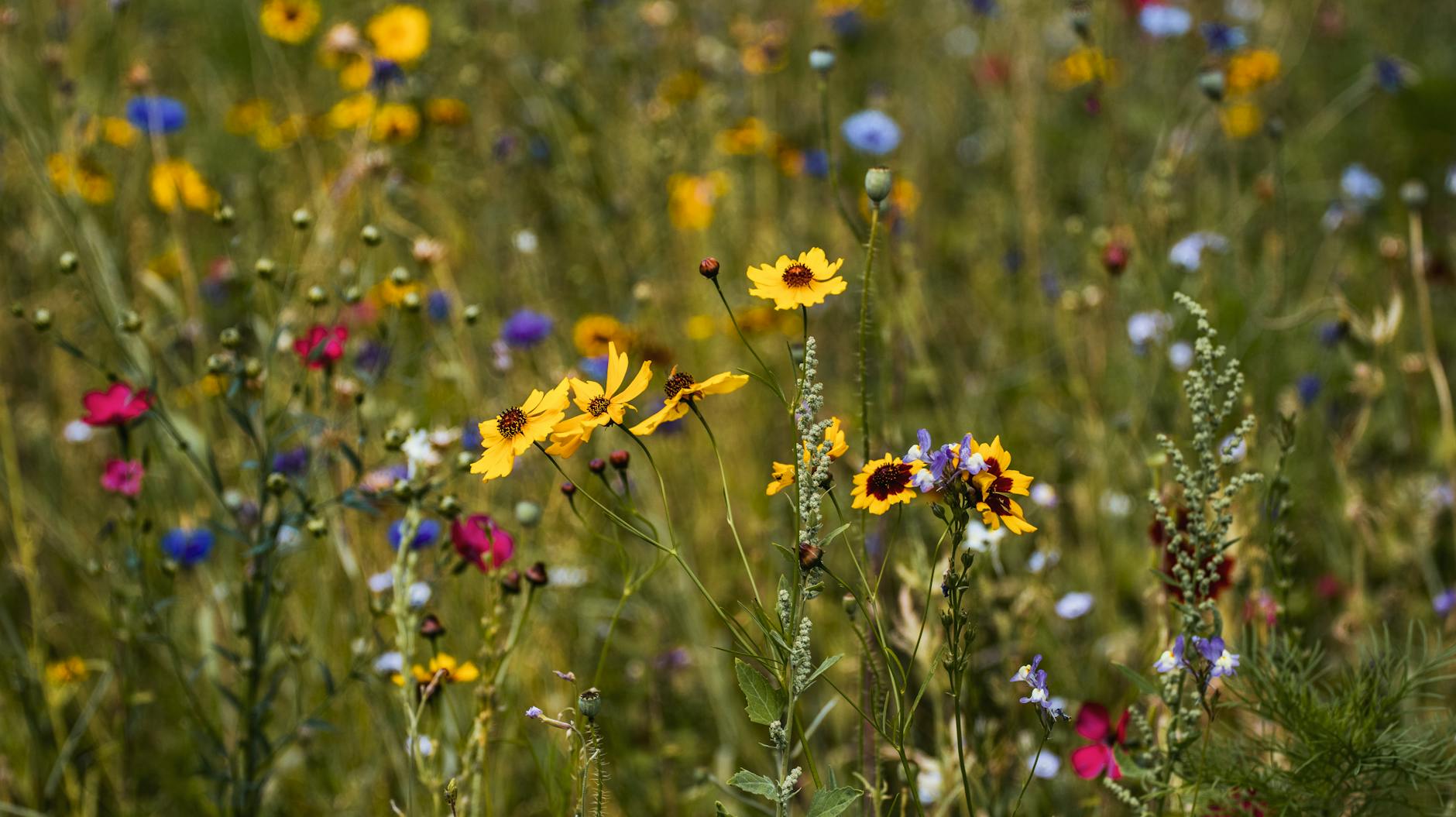
Nature is filled with biodiversity which expresses the endlessly multifaceted intelligence and creativity of God. Any replication of natural systems should include as much biodiversity as possible, which in turn will lead to a high level of resiliency to adverse conditions (fire, floods, wind, drought, erosion, pests, disease, etc.). Any design system interacts with an ecosystem, whether we intend it to or not, and the more biodiverse the system is, the more productive it is as well. This diversity should be in plant, animal, or microbial life, landscaping, farm and garden enterprises, etc. For example, inter-planting, rotational grazing, increasing edge spaces and utilizing margins allow for more species to inhabit an area which keeps parasites down, boosts adaptability to change, and leads to an abundance of life. In a world of changing weather patterns this is a must.
It is important to keep in mind that everything in an ecosystem interacts with and modifies its environment in some way. The more agents participating in an ecosystem (i.e. the greater the biodiversity), the more complex, beautiful and abundant the ecosystem becomes. The same is true of a human community. While working with others is hard and can be exhausting, at the end of the day it is totally worth it. More people, more creativity, more possibility, more beautiful expressions of God’s infinite intelligence. This diversity is about interdependence – the sustained relationship of beings peacefully operating and interacting with one another for the glory of God. If diversity makes you uncomfortable or scares you, go for a walk in nature and talk to God about it. Ask Him to show you His heart and desire for it.
#4 – Design for abundant productivity
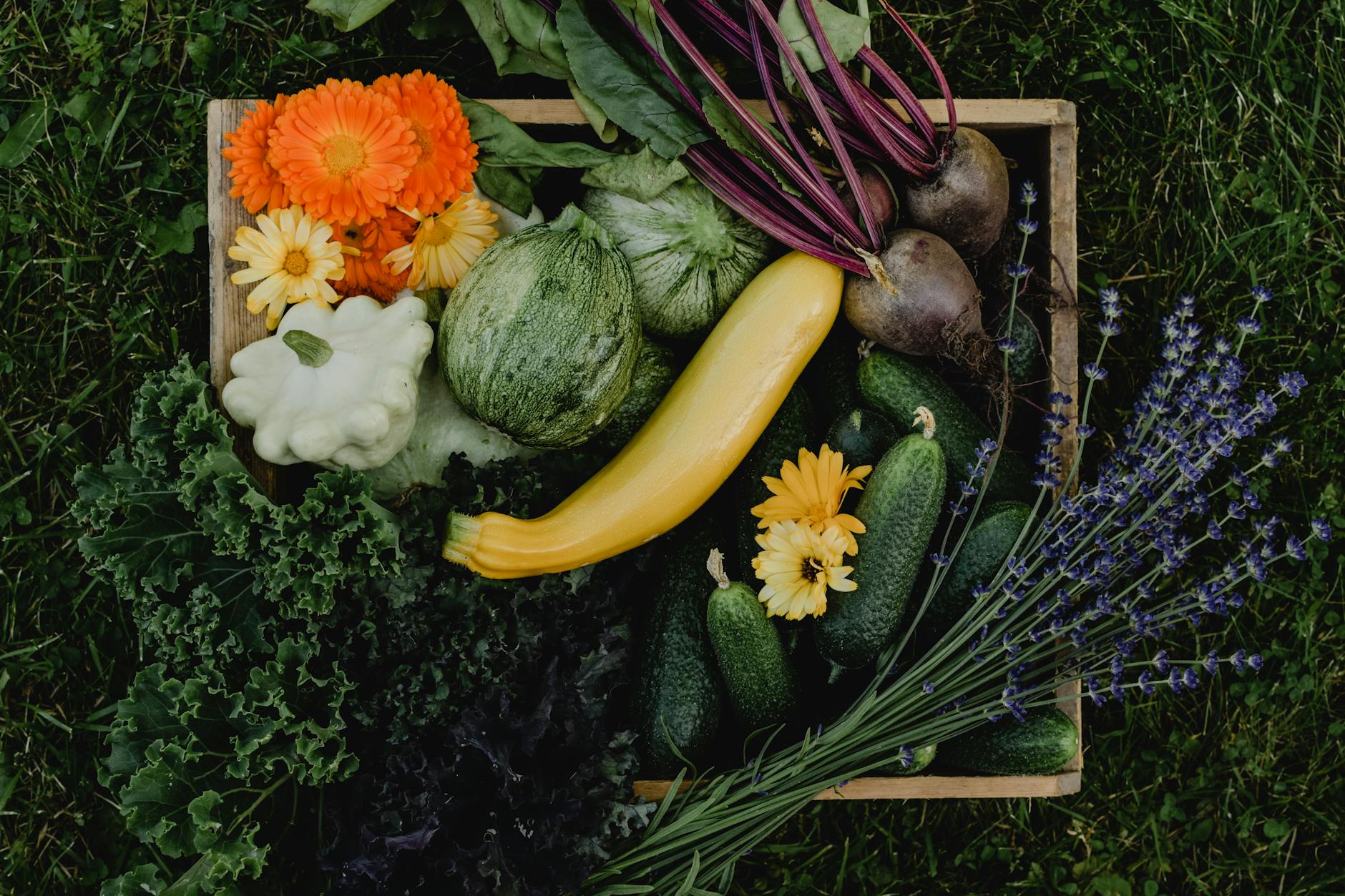
Waste not, want not. Our design systems should produce more than they consume – giving back to the Earth instead of depleting it, with higher yields and less labor and cost than conventional methods. This may take more time to get started and the initial cost may be higher, but overtime the maintenance cost and labor should be far less – with the system only improving over time. Talk about a great return on investment! Design based on these principles will lead to a more leisurely and luxuriant life than otherwise.
The system should not produce any waste (including pollution) since any output should serve as a functional input to a different part of the system. God did not design anything in nature that is not used (i.e. waste). It is fallen man who has created trash and junk. Therefore as Christians and God’s stewards of creation, we should be striving to live as waste-free of a life as possible. Although it may seem of no concern to some of us now, and perhaps impossible in our modern, industrialized world of mass manufacturing, our children and grandchildren will thank us – not to mention the many poor countries in the world that are inundated by the garbage rich countries like ours produce. Stay tuned for future posts where we will dive into how to make this possible (hint: it won’t be easy)!
In a truly productive design system renewable resources are used, produced and preferred over non-renewable ones. The system should also “produce” energy by harvesting and storing it in the form of sunlight, gravity potential, rainwater, etc. In keeping with the idea of renewable, sustainable, unlimited, etc. is the fact that the yield of any system is theoretically unlimited. God Himself is infinite and within creation we see a glimpse of this attribute. There is an endless amount of ways that a system can be designed and fit into a particular context, and each system can produce more and more yields without becoming depleted. The only limiting factor to an unlimited increase of additional yields (the number of uses of a resource, not the amount of resources itself) is the imagination and knowledge of the designer. This reality reflects God who is a Designer with infinite being, capacity, creativity and imagination. Let us pray for Him to make us more and more creative with our systems, that they would overflow with such abundance that even the poorest person would have food to eat, water to drink, and beauty to enjoy.
#5 – Keep it human-scaled
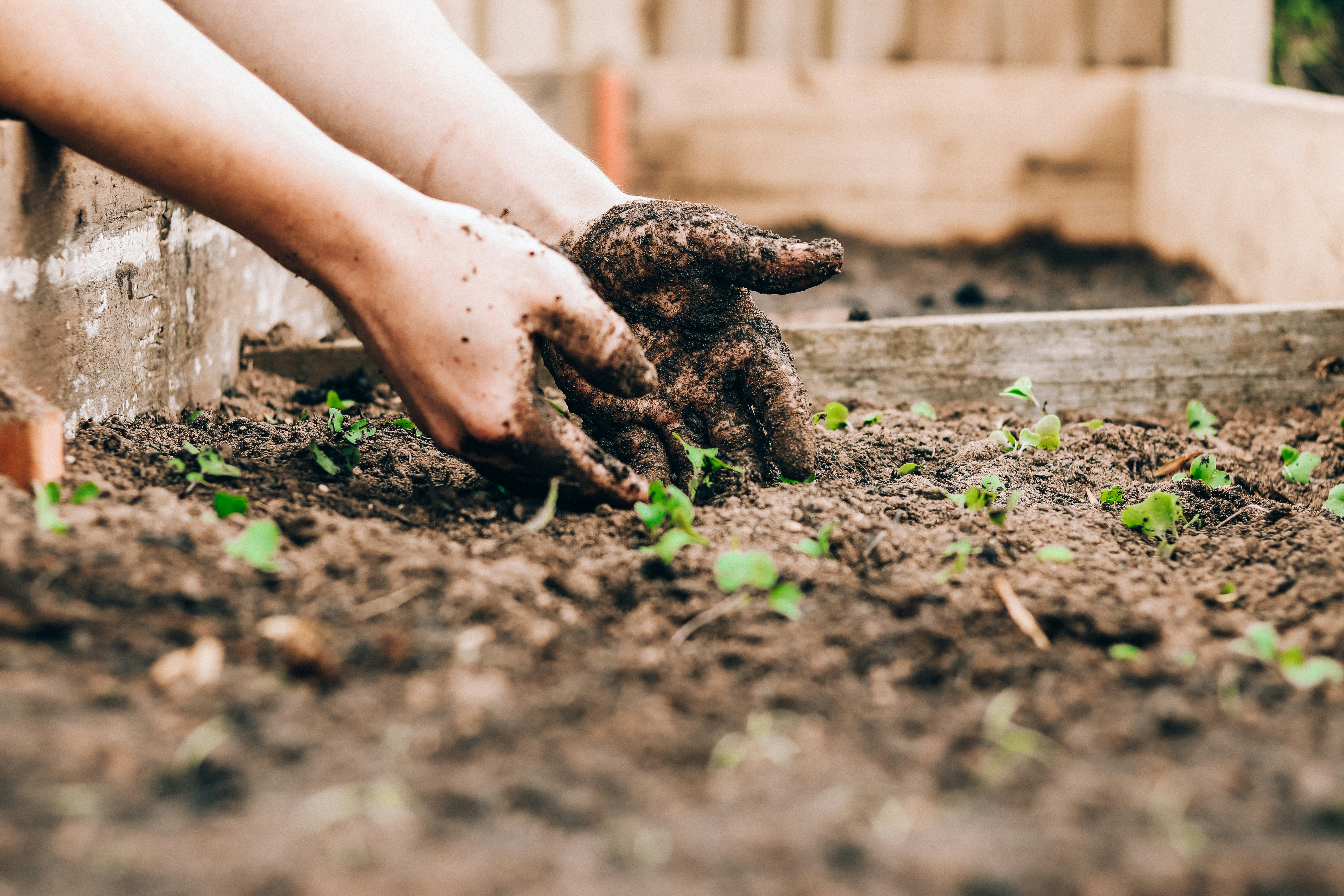
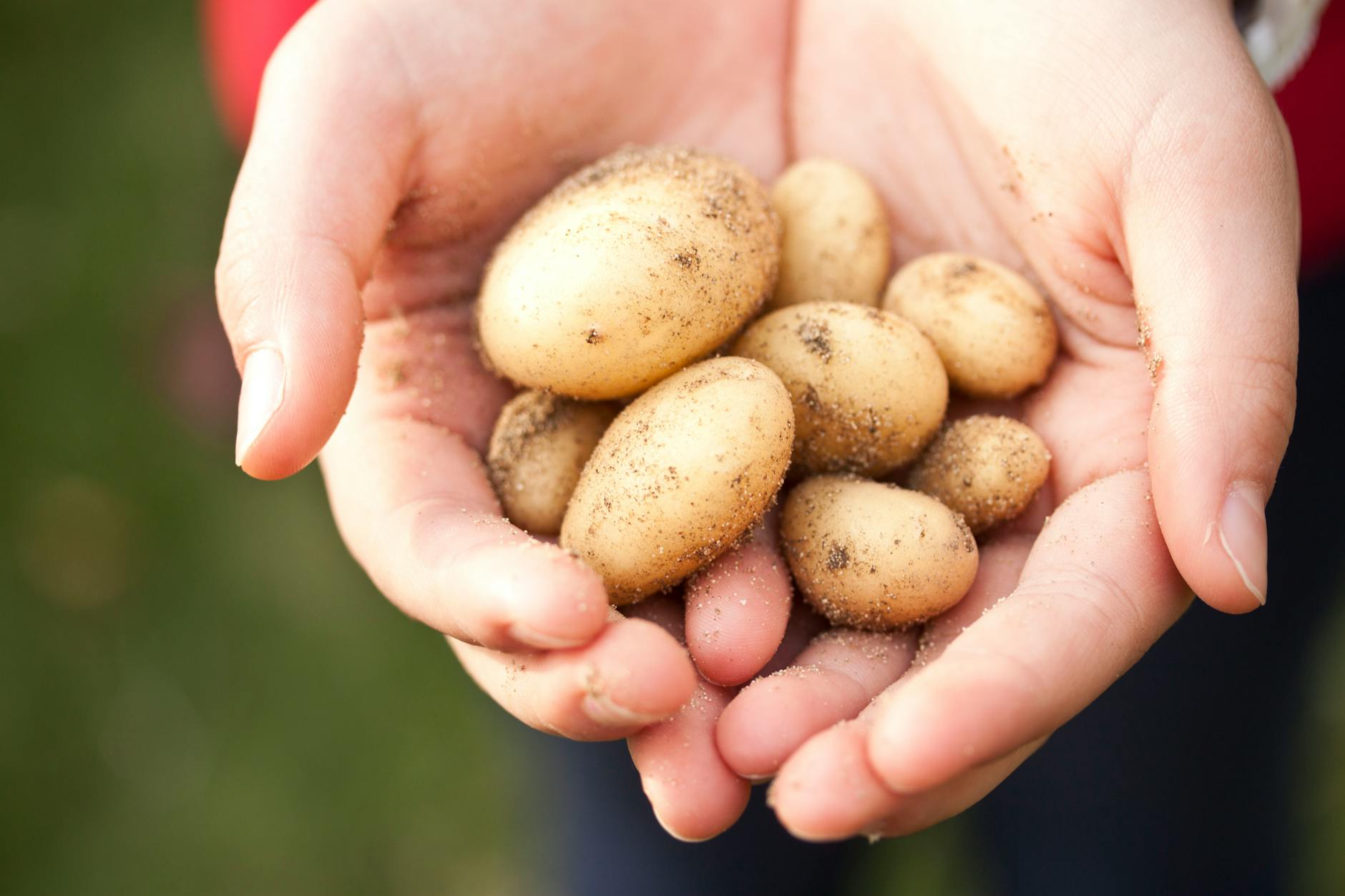
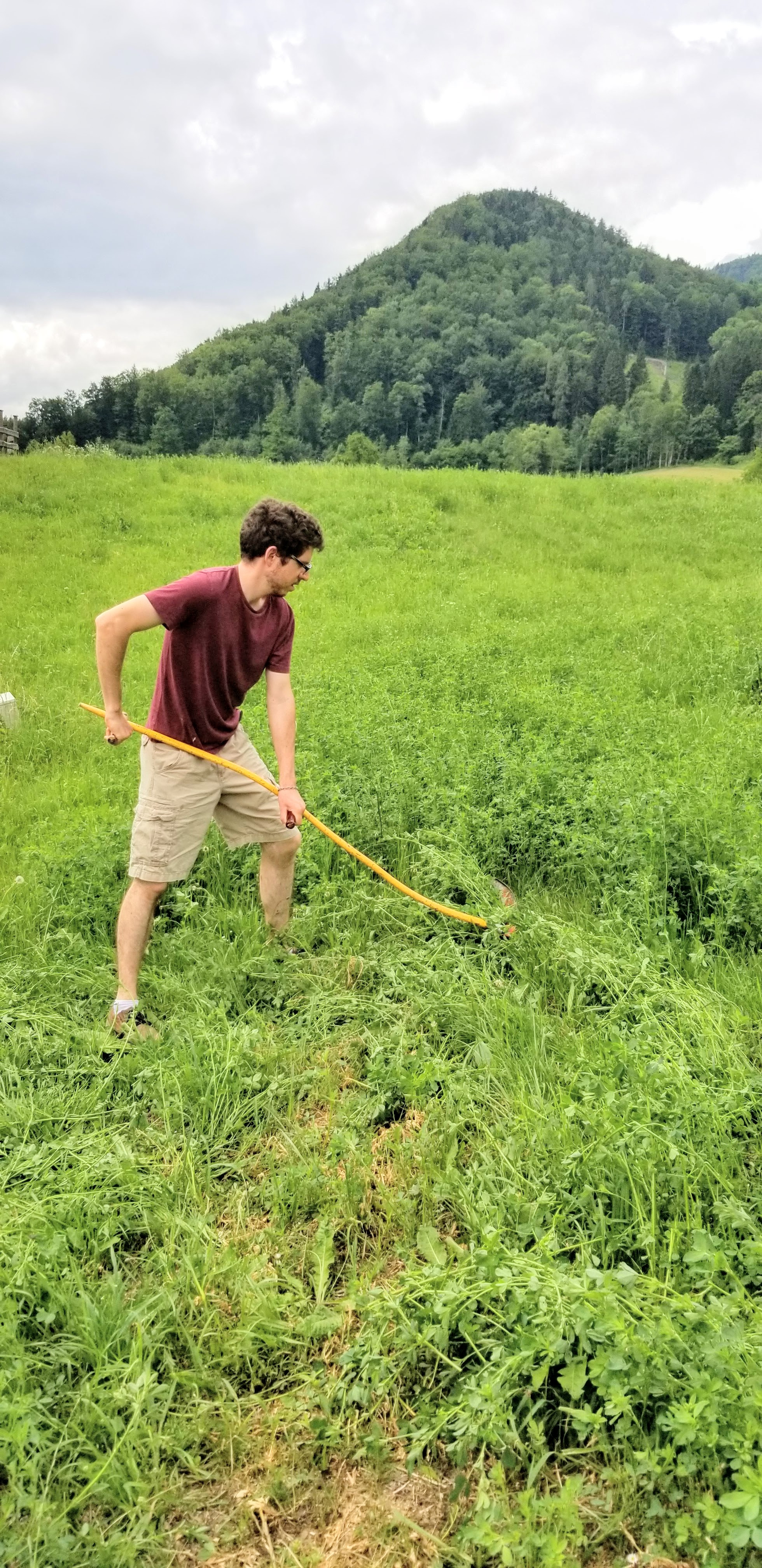
“The one small garden of a free gardener was all he needed…his own hands to use.”
-Samwise Gamgee
Lord of the Rings: Return of the King
Our design systems should incorporate and favor small and slow solutions that grow organically and naturally over large, artificial solutions that churn out a lot of results in a rapid and super-human pace. These solutions typically rely on a lot of unsustainable off-farm inputs (such as fossil fuels, synthetic chemicals that are often toxic, GMO grains and seeds, heavy machinery, etc.) which further degrade and pollute the landscape. Looking beyond food production to water treatment, home-building, and waste management – the more artificial the solution, the more it lies beyond the scale of the average person and the more likely it is to produce toxic side-effects.
An important part of this human scale is to live out the principle of subsidiarity by preferring local, DIY-friendly, and low-tech solutions as much as possible. This reflects the reality that human life does not need to be dependent on lab-synthesized chemicals, big corporations, government subsidies, or wealthy countries. Keeping our methods as rooted in our own human sensibilities and powers as possible respects our dignity and demonstrates solutions accessible to all people, rich or poor in any country in the world. In alignment with this principle is the fact that we should make the least change for the greatest possible effect. When a system is designed this way, there is less resistance and greater leverage for accomplishing what we need to in a way that can be carried out by the greatest number of people, with the poor, weak, and marginalized not excluded.
Putting It All Together
These principles are not just about how we garden, but how we ought to live. It is conservation by participation. These principles help us participate in creation in a way that brings us back into relationship with God.
 St. Spyridon Center
Leave a comment