When someone hears the acronym “CPR” they are probably going to think of cardio-pulmonary resuscitation. However, here we have a different kind of resuscitation in mind… but first, what is permaculture anyway?
Permaculture is a combination of the words “Permanent” and “Agriculture” and it is a system of design for human flourishing that follows the example of nature. It was created in the 1970s by Bill Mollison and David Holmgren as a response to the destructive industrialized design systems currently in existence across the globe. They recognized the need for re-imagining and re-designing how we provide for ourselves as humans. The Compendium of the Social Doctrine of the Church (#461) puts it well:
The biblical message and the Church’s Magisterium represent the essential reference points for evaluating the problems found in the relationship between man and the environment.1 The underlying cause of these problems can be seen in man’s pretension of exercising unconditional dominion over things, heedless of any moral considerations which, on the contrary, must distinguish all human activity. The tendency towards an “ill-considered“2 exploitation of the resources of creation is the result of a long historical and cultural process. “The modern era has witnessed man’s growing capacity for transformative intervention. The aspect of the conquest and exploitation of resources has become predominant and invasive, and today it has even reached the point of threatening the environment’s hospitable aspect: the environment as “resource” risks threatening the environment as “home”. Because of the powerful means of transformation offered by technological civilization, it sometimes seems that the balance between man and the environment has reached a critical point.”3
There is nothing really new about Permaculture, since its observations, principles, and techniques, while now scientifically more precise, have been in use throughout the world for all of history. It is our modern age that has abandoned and forgotten these approaches in lieu of mass production and consumption, and needs to be reminded once again of what our ancestors already knew. Most indigenous and traditional small-scale production of food, clothing, and structures, as well as land, water and waste management understood the fundamental truth of our dependence on the earth, and the role of the Divine in provision for human needs.
Permaculture’s methodology is the best there is, but its founders and its philosophy left out one big thing: GOD. There can be no human flourishing, no true and sustainable culture (agrarian or otherwise), no authentic stewardship of creation without man honoring his Creator. If man is not in right relationship with God, his efforts to produce food and care for the planet are ultimately fruitless, since these things were given by God to man in the first place as part of the divine economy. Man was intended to cooperate with God for his provision – even more so after the Fall when death entered the world.
“The relationship of man with the world is a constitutive part of his human identity. This relationship is in turn the result of another still deeper relationship between man and God. The Lord has made the human person to be a partner with him in dialogue. Only in dialogue with God does the human being find his truth, from which he draws inspiration and norms to make plans for the future of the world, which is the garden that God has given him to keep and till (cf. Gen 2: 15). Not even sin could remove this duty, although it weighed down this exalted work with pain and suffering (cf. Gen 3:17-19).”
–Compendium of the Social Doctrine of the Church, #452
One of the biggest goals of the St. Spyridon Center is to “baptize” the Permaculture and sustainable environmentalism movement. The methods are cutting-edge, research-driven, and incredibly observant and harmonious with natural law. But the philosophy needs a re-design: God needs to be put back at the center of it all. When this happens not only do we see the flourishing of body and environment, but we see the flourishing of what matters most – the everlasting soul of man.
For those who think secular or pagan things cannot be integrated in the life of the Christian, allow me to explain… Christ’s Church is given the responsibility of purifying, transforming, and elevating human culture and society by the gift of the Holy Spirit. This can apply to anything within that society/culture insofar as it is possible. If something is inherently evil then it obviously must be removed for we cannot sanctify something that is abhorrent to God or directly contradicts His love, truth and goodness. But the non-evil things (those which are good, true, and beautiful) can and should be sanctified (or “baptized”). For more on this from the Catholic Church, consider reading Gaudium et Spes, particularly paragraphs 58 and beyond.
To this end, the St. Spyridon Center has coined the term Christian Permaculture Regeneration (CPR) to take the methods and techniques of Permaculture and combine them with the truth of Catholic philosophy and theology. Doing so, we believe, will lead to both the physical and spiritual regeneration of our lives, our homes, and our culture. God knows our world is in desperate need of resuscitation! May the God of all graces, without Whom nothing is possible, bless this endeavor and breathe new life into His people.
Read more about the 5 Principles of CPR
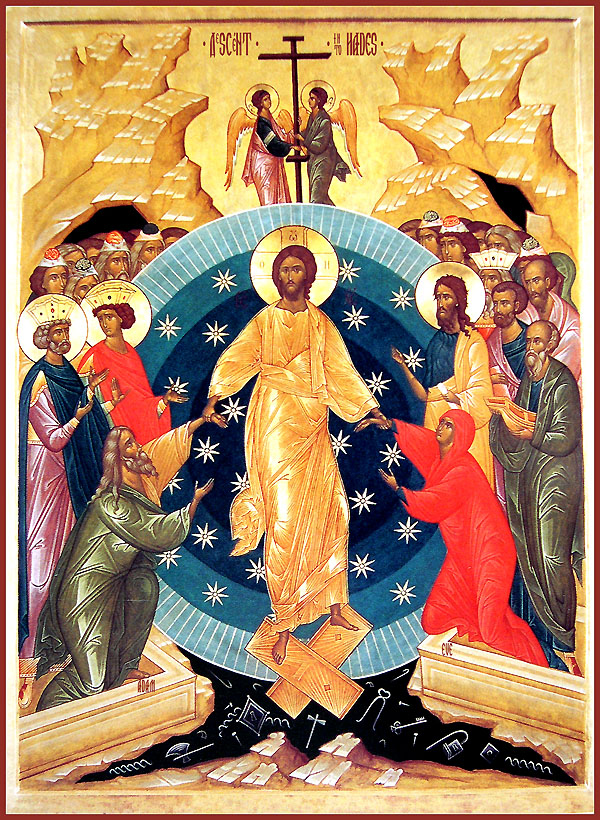
Thus says the Lord God to these bones: Behold, I will cause breath to enter you, and you shall live.
-Ezekiel 37:5
- Cf. Paul VI, Apostolic Letter Octogesima Adveniens, 21: AAS 63 (1971), 416-417. ↩︎
- Paul VI, Apostolic Letter Octogesimo Adveniens, 21: AAS 63 (1971), 417. ↩︎
- John Paul II, Address to participants in a convention on “The Environment and Health“ (24 March 1997), 2: L’Osservatore Romano, English edition, 9 April 1997, p. 2. ↩︎


Leave a Reply