
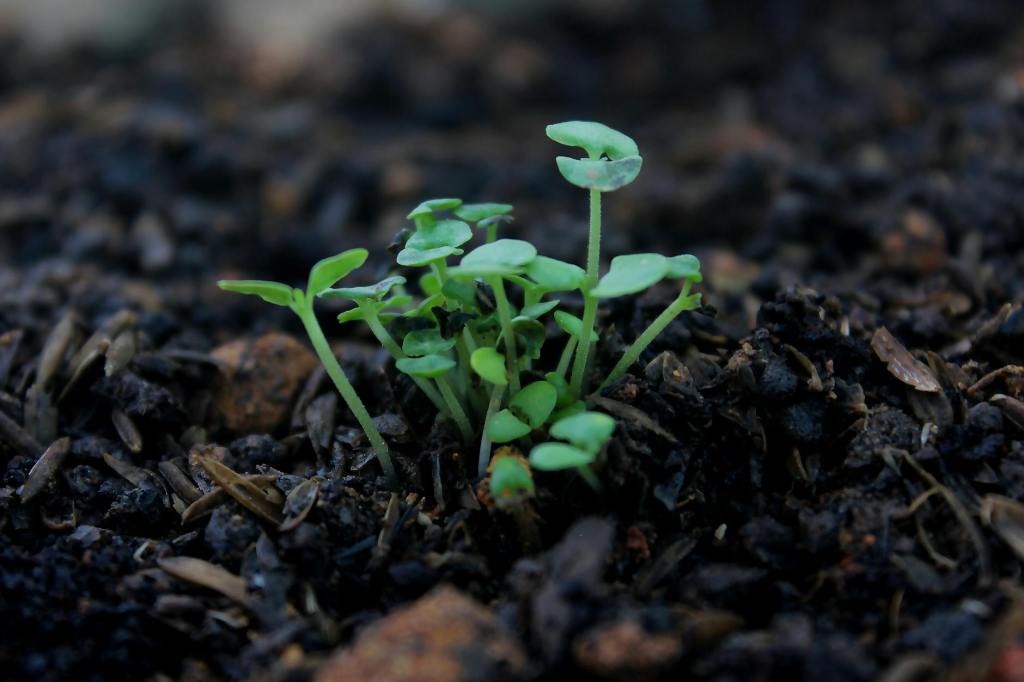
Composting can be a confusing topic so we are going to dive into the basics of what it is and then discuss its benefits to the garden, homestead, and the world, and how we can observe glimpses of God’s revelation in it. Many people have written about compost, and civilizations have practiced it for years beyond count. The goal here is not to write yet another secular compost article, but to offer a different perspective on it, one which gives God the glory and helps shed some light on this mystery of creation. At the St. Spyridon Center, our goal is to do research and find the excellent content out there where it exists so you don’t have to spend the time searching for it. As we make new discoveries on our own research sites we will share our research, especially if what we are exploring has not yet been well documented. Let’s get into it!
So, what is compost anyway? The word traces back to the Latin compositus which means “composed of”. This is a helpful starting place since compost is typically composed of a variety of materials. Very well and good, but what is the purpose of creating this earthly composition? To understand the nature of compost, and its benefits for us, we first need to look at its place in the hierarchy of creation, and its role in the greater nutrient/food cycle it is a part of (do you remember learning about the food web in school?). On a theological level, the composting process is where we see the first glimmer of God’s plan to bring life out of death.
In a compost system, dead organic matter (carbon-based material that has decomposed to the degree that it can no longer carry on its primary function) is transmuted into something that brings life and health to our plants, or the plants of our animals. More specifically, compost feeds the teeming populations of microorganisms in the soil. These little wonders of creation then feed the plants, and the plants in turn feed us. When we care for the life in the soil, we extend the concept of caring for the “least of these”1 and also apply what is says in Proverbs:
A righteous man has regard for the life of his beast,
-Proverbs 12:10
but the mercy of the wicked is cruel.
In a microscopic world that exists all around us but is invisible to us, these microorganisms (microbes for short) exist in a delicately balanced ecosystem. They take the center stage of a drama too small to be seen by the naked eye. God created these tiny beings as the foundation of all other life, connecting various elements of the life/nutrient cycle together. It is these microbes that make soil “alive” and that help plants gain access to the nutrients they need in order to survive and thrive. One teaspoon of “living” soil has more microorganisms than there are people on the planet, most of which the species and functions have not yet been identified. Like all non-rational created things, these tiny living beings go on doing the job God made them to do day in and day out, giving Him glory by their very existence. These little microbes praise God day in and day out, even when we do not. This reminds me of Jesus’ words to the Pharisees about His disciples who were praising Him:
“I tell you, if these were silent, the very stones would cry out.”
-Luke 19:40
It is a wonder that we can know anything about such tiny creatures! In His wisdom, God created man as a being that is immersed in and interacts with both the microscopic and macroscopic world. Our bodies are teeming with microscopic life but it is our rational minds that allow us to study them. For many years beyond count humans knew more about the solar system than the life in the soil under their feet. Microorganisms are what alchemize dead organic matter, composed of large molecules, into smaller molecules and ionic nutrients. Once broken down and digested by microbes, these nutrients can be taken back up into plants.
These microbes are the heart of a compost system. A compost pile is the original waste bin / recycling program. God is not a poor Designer – He doesn’t create trash or junk or anything that has no use and no purpose. Rather, He designed a world made for abundance where the output of one system becomes the input for another and everything is ordered toward serving and giving life to others. God’s generosity is woven into creation. When creation reaches its full stature it typically becomes fruitful and reproductive, and this can be seen on every trophic level. I say typically because the world is now subject to corruption since the Fall of Man. Not everything works as it should, but the general pattern is still quite observable. It is man who has disrupted this process and man must find a solution to it, with God’s help.
“…[F]or the creation was subjected to futility, not of its own will but by the will of him who subjected it in hope; because the creation itself will be set free from its bondage to decay and obtain the glorious liberty of the children of God.”
-Romans 8:20-21
As a side note: ever since the Industrial Revolution, and especially the discovery of petroleum oil (which happened 30 minutes from where the St. Spyridon Center is currently located), humanity has found it quite difficult to dispose of the products that were created, such as plastic. Before this point in history, the vast majority of products were biodegradable and were simply composted or buried, and returned to the earth from which they came. There was effectively no trash or waste stream residue; almost everything was able to be repurposed either by man or by microbes.
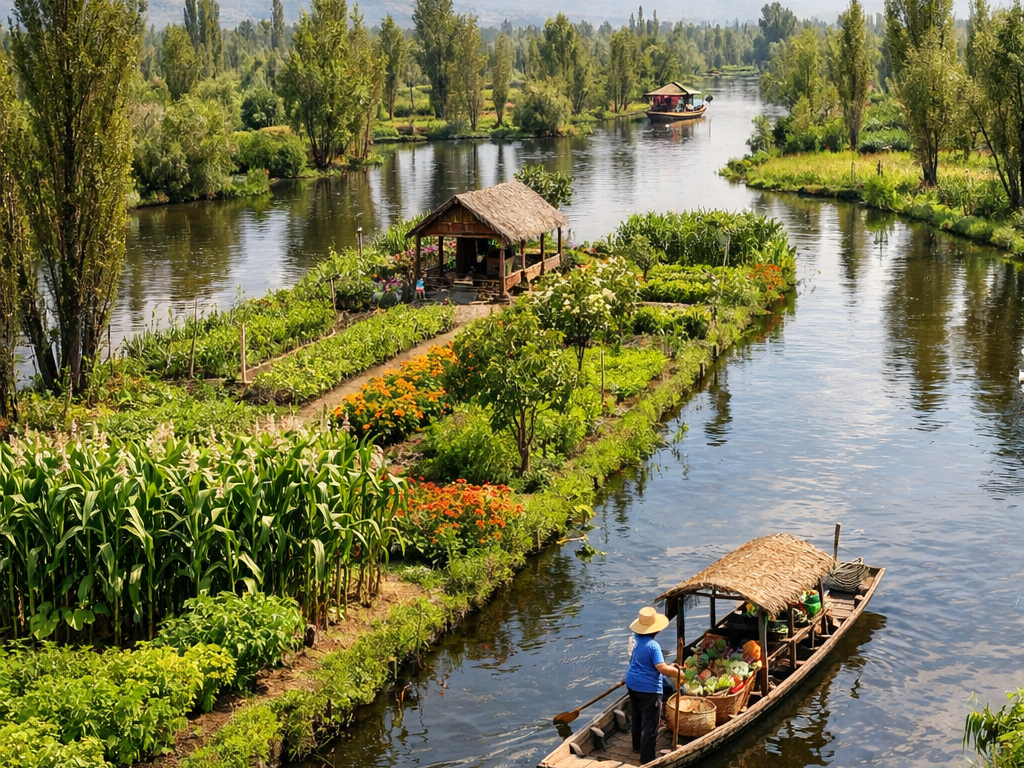
Ancient cultures used to treasure all forms of waste and manure, including “humanure”, in order to build the fertility of their soils. For example, the Chinese would make outhouses along roadways and decorate them so that people would stop by and make a “delivery” that would get composted and put in their gardens. They would also tear out the earthen kitchen floor in farm houses every decade or so, having been covered in food scraps and other spilled organic substances, and they would put the entire clay floor in their compost and eventually in the garden. In ancient Mēxihco Tenōchtitlan (part of current day Mexico City), the people there ran their sewers into a big lake (the ancient Lake Texcoco). In order to keep the lake and aquatic species that lived there from being polluted with excess nutrients, they built big floating rafts/islands covered in crop plants whose roots dipped down into the lake and absorbed the nutrients, producing a ton of food in an otherwise arid landscape and purifying the water at the same time. These were called chinampas (pictured below).
So what are the benefits of compost? Why should we, who live in modern times with technology like flush toilets and landfills, compost? While it is true that we now have toilets and residential and commercial trash services to take all of our garbage and put it in a giant hole in the ground, this should ideally be used as a last resort. Not only do landfills look and smell terrible and off-gas copious amounts of methane into the atmosphere, they also divert the nutrients that should be going to our farms and gardens to produce more food for us.

Granted, a landfill at least centralizes the trash so it is no longer visible and stinking up our streets, but imagine if instead of paying to get rid of so much trash, we were able to freely compost as much of it as possible (some people have made a lifestyle of trying to live nearly waste free) and build up our soils at the same time. In addition to the cost savings and agricultural and environmental benefits, there is also the human benefit. When we take ownership of our “waste” at the most local level (thus living out the principle of subsidiarity) it helps us to become more responsible for what we produce and consume, and better stewards of God’s creation. There is something so beautiful and fulfilling about seeing and participating in the transformation of our “waste” by microorganisms into a free, high-quality, plant-loving soil amendment.
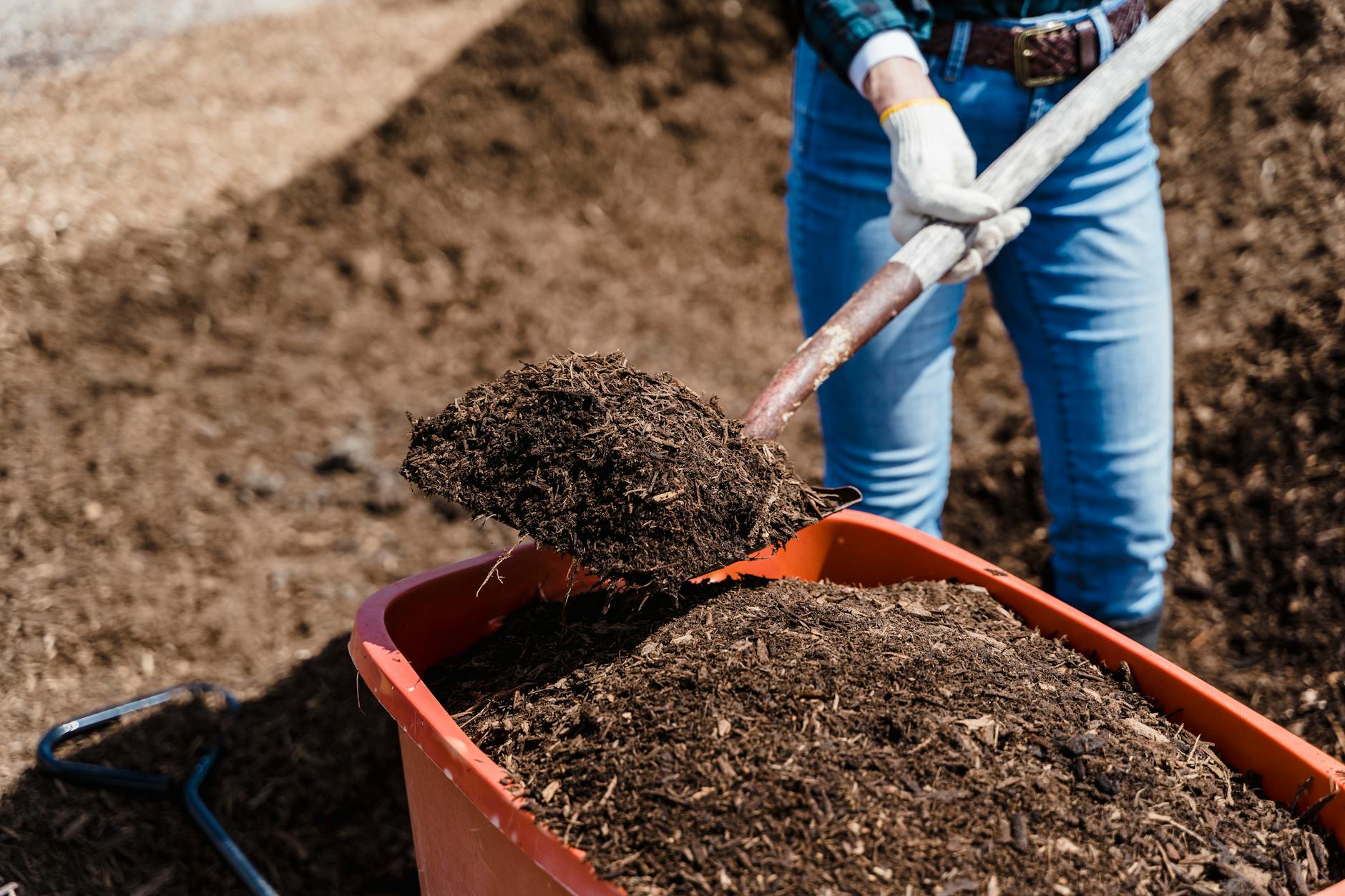
So, how do we do it? If you go and look up how to compost on the internet you will see that there are a lot of ways to do it and, depending on how you do it, there are different setups and different things you need. In Part Two of this blog we are going to compare 12 different composting systems and methods so that you can choose the right one for you. For now, here are a few basic principles on how to compost.
An overview: a good compost system needs Oxygen, Moisture, Warmth, Surface Area, and the right ratio of “Browns” (Carbon) and “Greens” (Nitrogen).
Oxygen: A good composting system provides the right environment for aerobic microorganisms to break down large organic molecules (molecules containing carbon) into small forms that plants can use. Aerobic means that these microbes require oxygen to survive and reproduce. Keeping the compost system aerated means that these microbes will thrive. This is why compost systems include air holes or require regular turning of a pile. When a compost system becomes anaerobic (without oxygen) the molecules are typically broken down much slower, and these anaerobes also give off a foul odor since they produce gases like ammonia and hydrogen sulfide. The bad smell indicates to our human sensibilities that something is not quite working the way it should.
Moisture: Microbes need water and without water they will either “hibernate” or die. Water allows them to live and allows them to move since they “swim” more than they “crawl”. Too little water (below 60%) and a compost system slows down or stops, but too much water and the nutrients and microorganisms get washed away, or the compost system becomes anaerobic (water blocks the movement of oxygen). The right amount of moisture is one that feels like a damp sponge, wet enough to wet your hands and wring out a drop or two, but not so wet it feels soppy or lots of liquid comes out when squeezed. This is another way we utilize our human sensibilities.
Warmth: When the temperature drops below 39 degrees Fahrenheit, microbial activity declines significantly. This is the same principle we use in our refrigerators – keeping food cold delays microbes from eating it and spoiling it via the toxins in their waste. If temperatures get too hot, microbes start to die. Certain types of microbes prefer different temperatures, so the preferred temperature range for a compost system is between 80 and 145 degrees Fahrenheit.
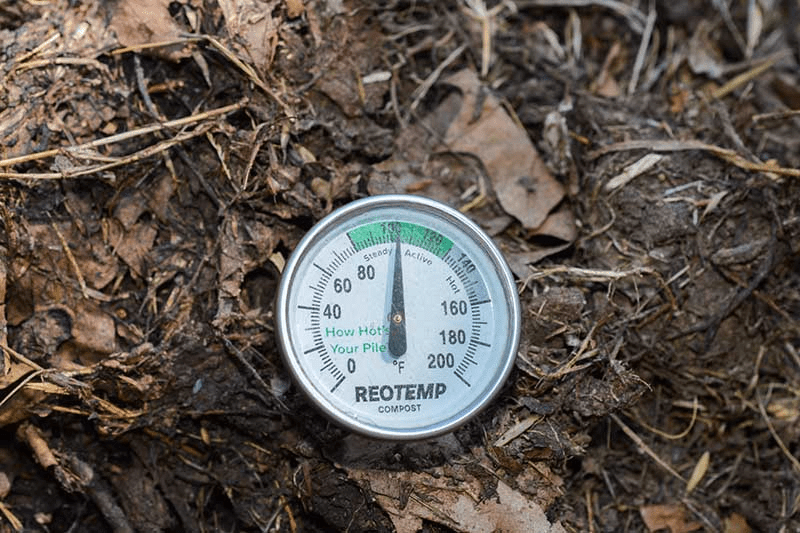
When a compost pile gets big enough, and the other conditions are right, the heat generated by the microbes can easily get beyond this upper limit for a few days before cooling back off. This is why “hot compost” piles are at least one cubic yard in volume, to keep the temperature up and the microbes as active as possible. This is also why barns filled with hay (dry grass) that has excessive moisture can spontaneously combust due to the hay’s nearly ideal conditions for composting. When the carbon-to-nitrogen (C:N) ratio is suitable, wet hay becomes a breeding ground for microbes. These microbes generate heat as they break down the organic material, and if the temperatures rise high enough, ignition can occur. This is precisely why hay is carefully dried before storage.
Surface Area: If you were to take a solid log and put it in your compost system, it would take years for it to break down. The reason is that there is not very much surface area for the microbes to colonize. Microbes need a place to live and access to the carbon food source. The more surface area, the more microbes can eat, live, and multiply which means the faster something can break down. An increased surface area also means more oxygen and water can be available to the microorganisms as well. For this reason it is important to shred, chip or mulch things like paper, cardboard, leaves, branches, etc. before adding them to a compost system, as this creates a lot more surface area. How small can you shred things? The finer the better, as long as you do not create a uniform layer of fine particles, as then these particles can clump back together in the presence of moisture and create anaerobic conditions which will actually prevent composting from happening quickly. A good rule of thumb is to have a variety of sizes of materials with carbon-rich materials being more finely shredded than nitrogen-rich sources. Many carbon sources (especially wood) has high amounts of lignin (an organic polymer that provides rigidity and support in plant cell walls) which takes a long time to break down. It is decomposed primarily by fungi which is why mushrooms are often found growing on trees.
Carbon and Nitrogen: Carbon is a food/energy source for microbes and this is what they are “eating” in the compost pile. However, in addition to carbon, microbes also need nitrogen. Microbes need nitrogen in order to carry out their essential life functions. The more nitrogen there is available, the more the microorganisms can reproduce. The optimal ratio of carbon to nitrogen is between 20:1 and 30:1 to produce the best environment for the microbes. This is called the C:N ratio. When a compost system meets this ratio, and has plenty of oxygen and the right amount of water, compost can be made fairly quickly since the microbes are so busy digesting and reproducing. Without enough nitrogen, composting slows down and is typically accomplished more by fungi than by bacteria (some of the main microbes in a composting system). “Cold composting” simply means there is less nitrogen and so it takes longer than “hot composting” where there is plenty of nitrogen. Too much nitrogen will result in over-volatilization of nitrogen into the atmosphere in the form of ammonia (NH3). Our human noses are very sensitive to the smell of ammonia and this is why composting systems that have too much nitrogen relative to the amount of carbon smell bad. This, combined with anaerobic fermentation in the digestive tract, is also why manure smells bad – manure is very high in nitrogen for the amount of carbon present. For this reason, adding carbon-rich materials such as straw, wood shavings/chips, etc. makes manure smell better. The carbon ties up the nitrogen and starts to become compost as the microbes get to work.
So, how to determine how much carbon and nitrogen something has and how much of each to add to your compost system to get to the right ratio? This is a complicated question. Many online sources provide various tables listing out the different C:N ratios for various feedstocks such as grass clippings, newspaper, coffee grounds, chicken manure, etc. Some sources, like this one, even provide a calculator (although I cannot guarantee the accuracy)2. The reality is that many sources disagree on the exact amount of carbon and nitrogen in each source and there are many caveats for each source: i.e. how fresh is the material, does the manure have bedding in it, is there still soil on the plant roots, etc.
Rather than memorizing a list of ingredients with approximate ratios just keep in mind that carbon sources are typically brown in color since they are long dead and the other nutrients and more complex proteins have left them, leaving behind only carbon. These are called “browns”. The exception for this is manure and seeds or beans that are brown (like coffee beans/grounds) – these typically have more nitrogen in them and so would not count as a carbon-rich source in terms of composting. Nitrogen sources are typically more colorful (predominantly green-hued) since they were more recently alive. They still have nutrients and more complex proteins in them (which is why they are higher in nitrogen). These are called “greens”. Examples of “browns” and “greens” can be seen in the infographic below.
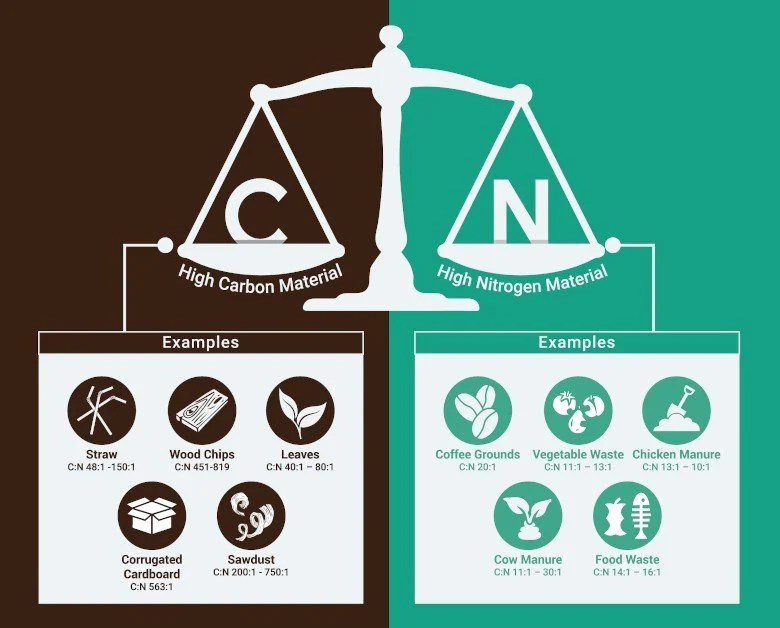
Rules of Thumb:
Composting is another great example of why participating in creation requires the human senses God made us with. To this end, here are some general principles to abide by in determining what/how much to put in your compost system:
- Add about 2 parts “browns” to 1 part “greens” – this will get you in the ballpark of the 20-30:1 ratio. Water in each layer if there has not been a natural source of moisture recently (i.e. rain).
- If your compost smells bad, add more “browns” (carbon)
- If your compost is too wet you can:
- add more carbon (it’s okay if doing this pushes you closer to 40:1 as some extra carbon is good for absorbing excess moisture as well as providing bulk content to keep air trapped in your pile)
- elevate your compost pile to get it off the ground if you have high ground water or lots of surface water
- add more drainage holes
- place a covering over it such as a tarp or roof to keep the rain out
- If your system is not making compost very quickly you can:
- add more water if it seems too dry
- add more “greens” (nitrogen)
The most important thing to remember is use the senses and sensibilities God has given you, ask good questions, think critically using the principles here, do your own research to learn more, and don’t worry about getting it exactly right. Nature is both fragile and also very robust and forgiving, able to bounce back and still function even without ideal conditions. As long as you get things roughly correct you will be fine and will make great compost. The more you do it the better you will be at it and the more refined your intuitions will become!
A quick note: CPR principle #3 talks about the importance of biodiversity, and composting is certainly no exception! The more diverse material you incorporate into your compost system the better the compost will be as it will both attract more diverse microorganisms and there will be a more diverse nutrient and mineral profile. It also prevents build up of substances that are toxic to plants in high quantities such as salt (from something like urine) and caffeine (from something like coffee grounds). Substances like these are great for composting when used alongside other feedstocks, and not in massive quantities without a well-designed system to mitigate for toxic buildup.
That’s it for this article. Great job if you made it to the end! Stay tuned for Part Two where we will we will compare 12 different ways you can compost and unpack the practical information so you can decide which one works best for you!
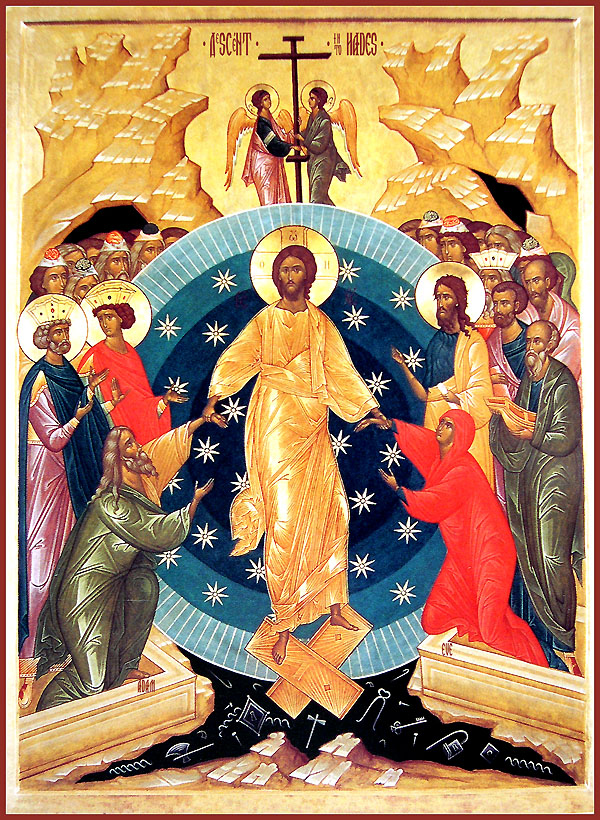
Glory to Jesus Christ, risen from the dead!
- cf. Matt. 25:40 ↩︎
- For those wanting a highly accurate way of achieving the ideal compost ratio, have a look at this calculator by Cornell university. It takes into account weight (as opposed to just volume) and water content as well as %N and %C. ↩︎
 St. Spyridon Center
Leave a comment